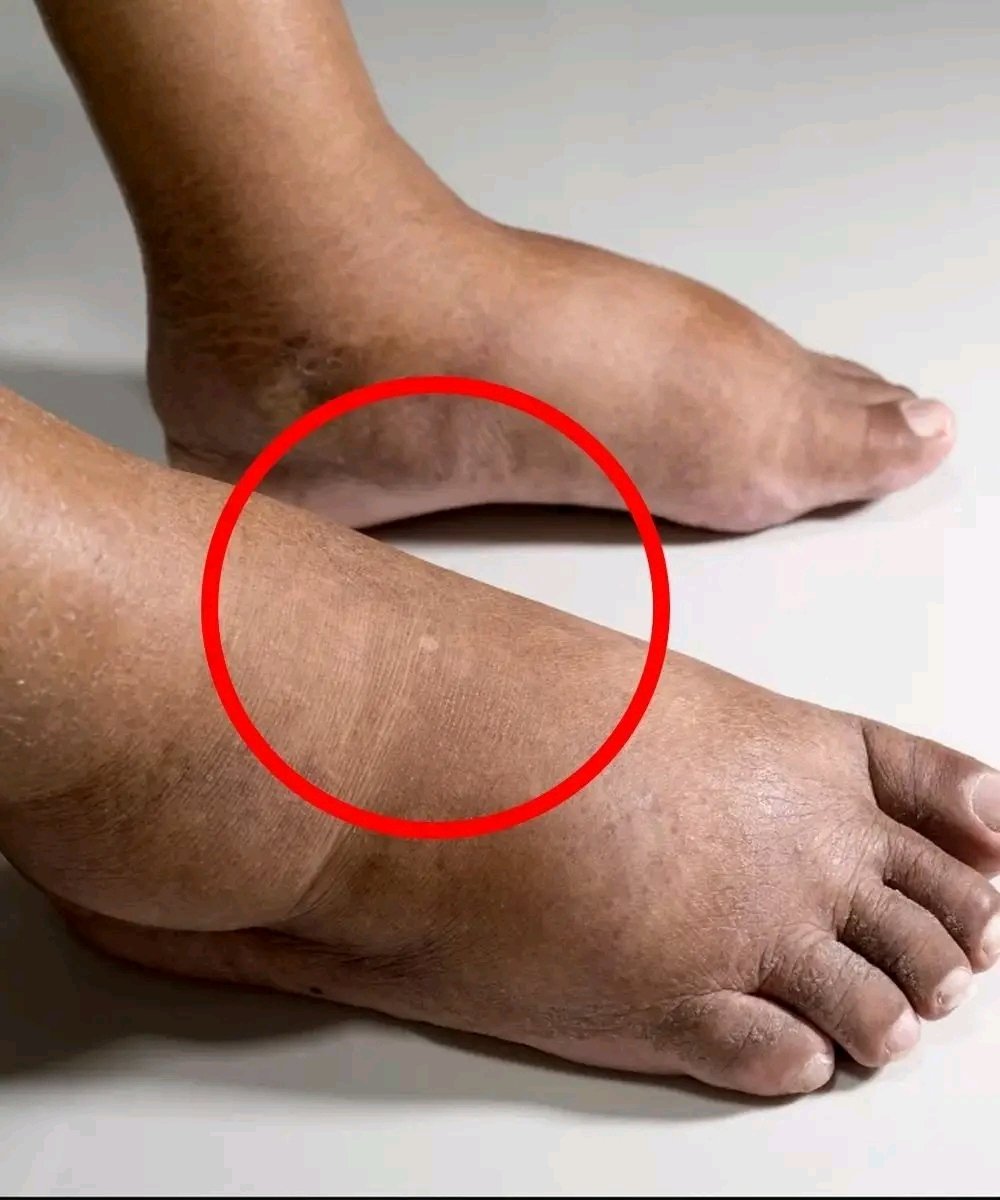
Swelling in the feet and ankles, also called edema, happens when excess fluid builds up in the tissues. It can be temporary and harmless, but sometimes it may signal an underlying health problem.
1. Standing or Sitting Too Long
Remaining in the same position for long periods can cause fluid to pool in the lower legs, leading to swelling.
2. Eating Too Much Salt 🧂
A high-salt diet causes the body to retain water, which can lead to swelling in the feet and ankles.
3. Pregnancy
Many women experience swollen feet during pregnancy because the body holds more fluid and the growing uterus puts pressure on veins.
4. Injury or Sprain
If you twist or injure your ankle or foot, swelling is part of the body’s natural healing response.
5. Being Overweight
Excess body weight can place additional pressure on the veins in the legs, which may lead to swelling.
6. Poor Blood Circulation
Conditions that affect blood flow, such as varicose veins, can cause fluid to accumulate in the lower legs.
7. Heart Problems ❤️
If the heart does not pump blood efficiently, fluid may build up in the legs, feet, and ankles.
8. Kidney Issues
The kidneys regulate fluid levels in the body. If they are not working properly, extra fluid can collect in the legs.
9. Liver Disease
Liver problems may lower the level of important proteins in the blood, causing fluid leakage into tissues.
10. Certain Medications 💊
Some medicines can cause swelling as a side effect, including:
Blood pressure medications
Hormone therapies
Anti-inflammatory drugs
When to See a Doctor ⚠️
Seek medical advice if swelling:
Appears suddenly
Is painful or severe
Occurs in only one leg
Comes with shortness of breath or chest pain
Simple Tips to Reduce Swelling
✔ Elevate your feet when resting
✔ Reduce salt intake
✔ Drink enough water
✔ Exercise regularly
✔ Avoid sitting or standing for long periods
Small lifestyle changes can often help manage swelling, but persistent swelling should always be checked by a healthcare professional.