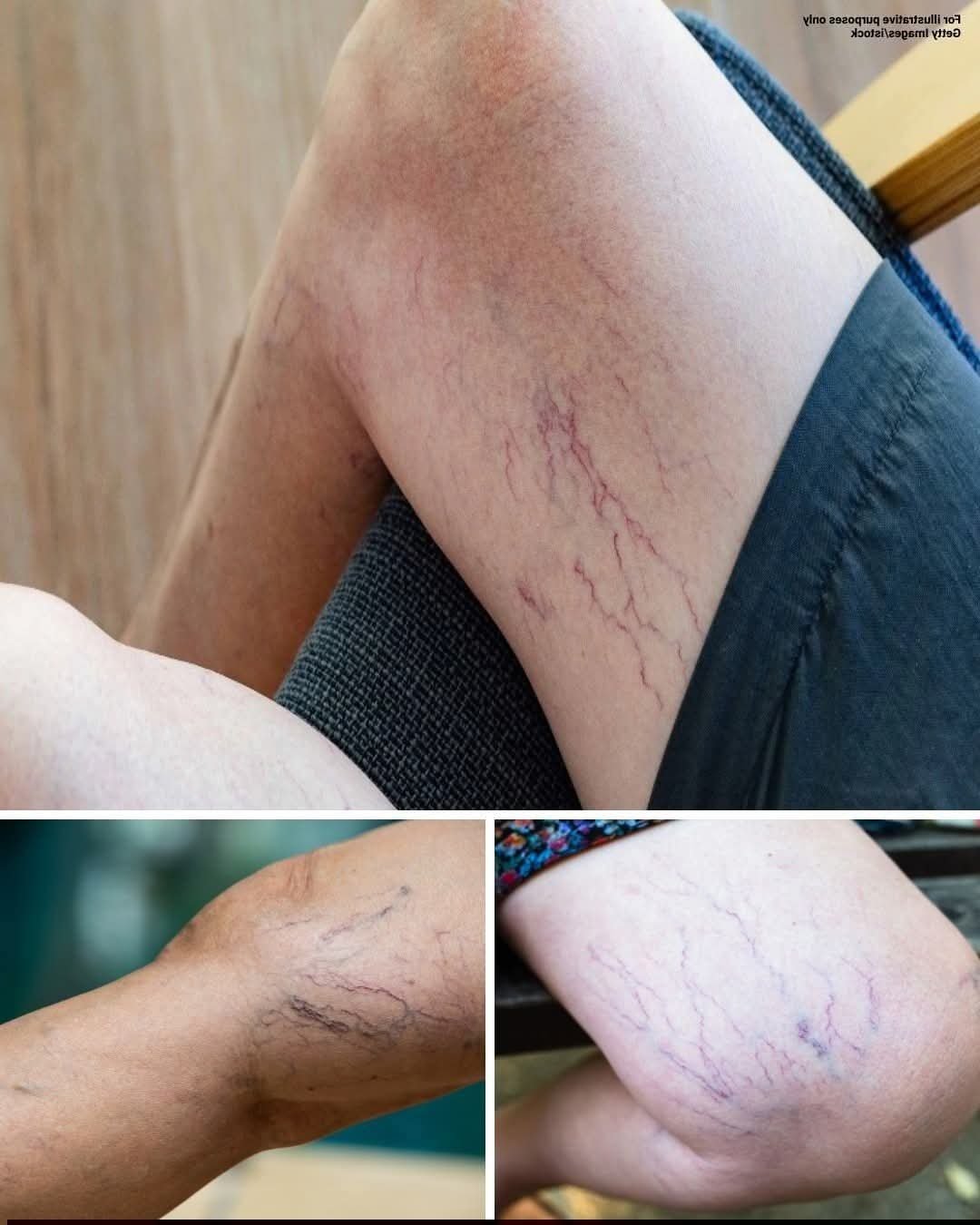
Seeing purple or bluish veins on your legs is actually quite common—and in most cases, it’s not dangerous. But it can be your body giving you clues about what’s going on beneath the surface.
🔍 1. Spider Veins (Most Common Cause)
These are small, thin purple or red veins close to the skin surface.
They often appear due to:
Standing or sitting for long periods
Hormonal changes
Genetics
👉 Usually harmless, but some people treat them for cosmetic reasons.
⚠️ 2. Varicose Veins
If the veins look bulging, twisted, or raised, they may be varicose veins.
This happens when blood pools due to weak vein valves.
Symptoms may include:
Aching or heavy legs
Swelling
Itching around veins
👉 Not always serious, but can worsen if ignored.
🧬 3. Thin or Aging Skin
As you age, your skin gets thinner, making veins more visible—even if they’re perfectly normal.
🧍 4. Poor Circulation
Purple veins can sometimes indicate slower blood flow, especially if you also notice:
Cold feet
Leg cramps
Numbness
👉 This may need medical attention if symptoms persist.
⚖️ 5. Weight & Lifestyle Factors
Being overweight increases pressure on veins
Lack of movement affects circulation
👉 Regular walking and leg elevation can help.
🚨 When Should You Worry?
See a doctor if you notice:
Sudden swelling in one leg
Pain or warmth around veins
Skin color changes or ulcers
These could signal more serious conditions.
✅ Simple Tips to Improve Leg Vein Health
Move regularly (avoid sitting too long)
Elevate your legs when resting
Wear compression stockings
Stay hydrated