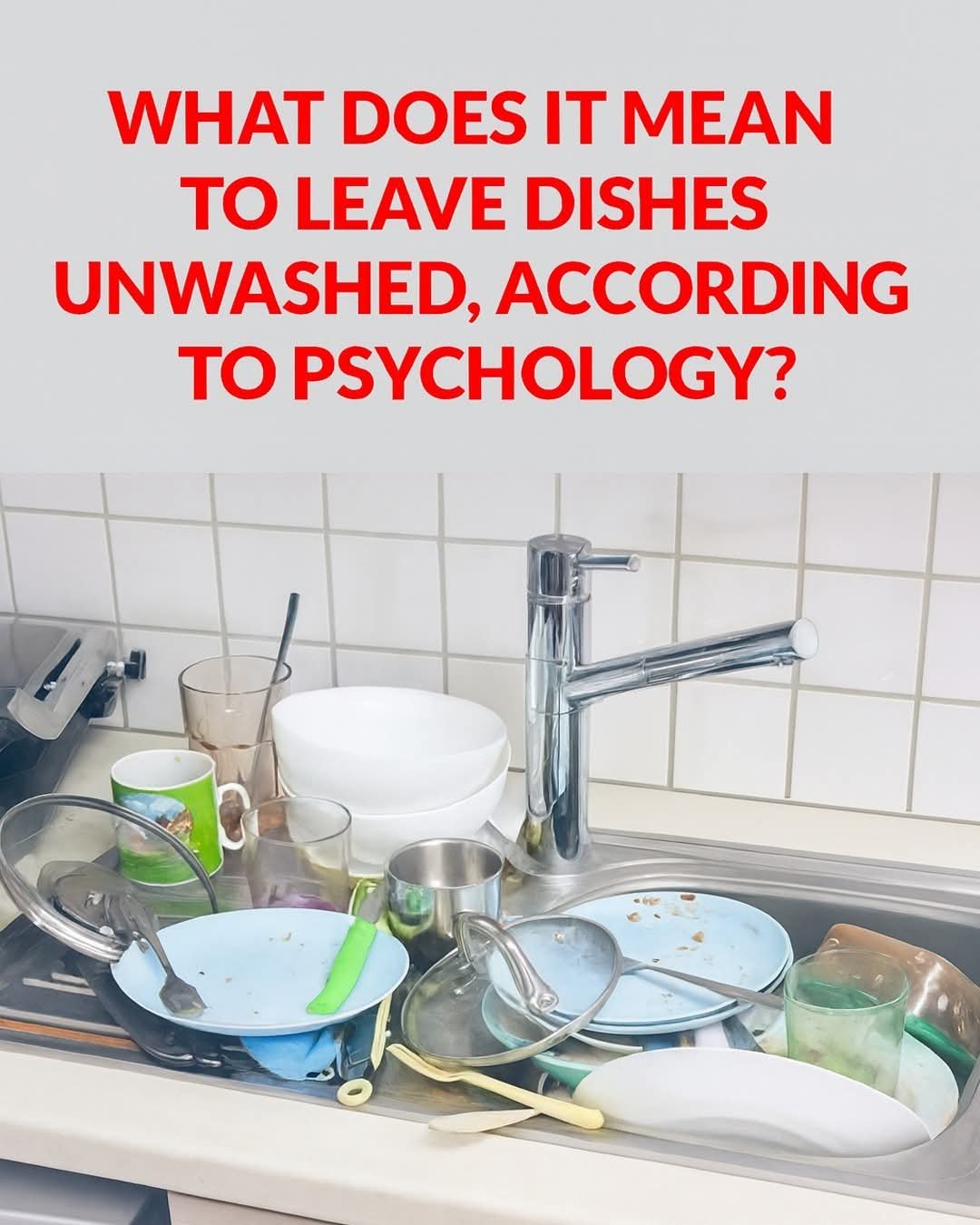

Many people leave dishes in the sink thinking they will wash them later. While this may seem like a small habit, psychologists say it can sometimes reflect how we feel mentally and emotionally.
A sink full of dishes doesn’t always mean laziness. In some cases, it may reveal deeper psychological patterns.
1. Mental Exhaustion
After a long day, many people simply lack the energy to do small tasks like washing dishes. When someone is mentally drained from work, stress, or responsibilities, chores can feel overwhelming.
2. Stress or Overload
When life becomes too busy, the brain often prioritizes urgent tasks and ignores smaller ones. Dirty dishes piling up may simply indicate stress, time pressure, or feeling overloaded.
3. Procrastination Habits
For some people, leaving dishes is a form of procrastination. The mind tells itself, “I’ll do it later.” Over time, this habit can make simple chores feel much bigger than they actually are.
4. Impact on Mood
Interestingly, cluttered environments can influence mental well-being. Research in Environmental Psychology shows that messy spaces may increase feelings of stress and reduce focus.
A clean environment often helps people feel more relaxed and in control.
5. Why You Shouldn’t Let Dishes Pile Up
Leaving dishes too long can also create practical problems:
Bacteria and bad odors can develop
Food residue attracts insects
The task becomes harder the longer it waits
Cleaning dishes quickly keeps the kitchen hygienic and easier to manage.
Leaving dirty dishes once in a while is completely normal. But when they pile up regularly, it may signal stress, fatigue, or habits that are easy to change.
Sometimes, doing small tasks immediately can bring a surprising sense of relief and mental clarity. 🧼✨