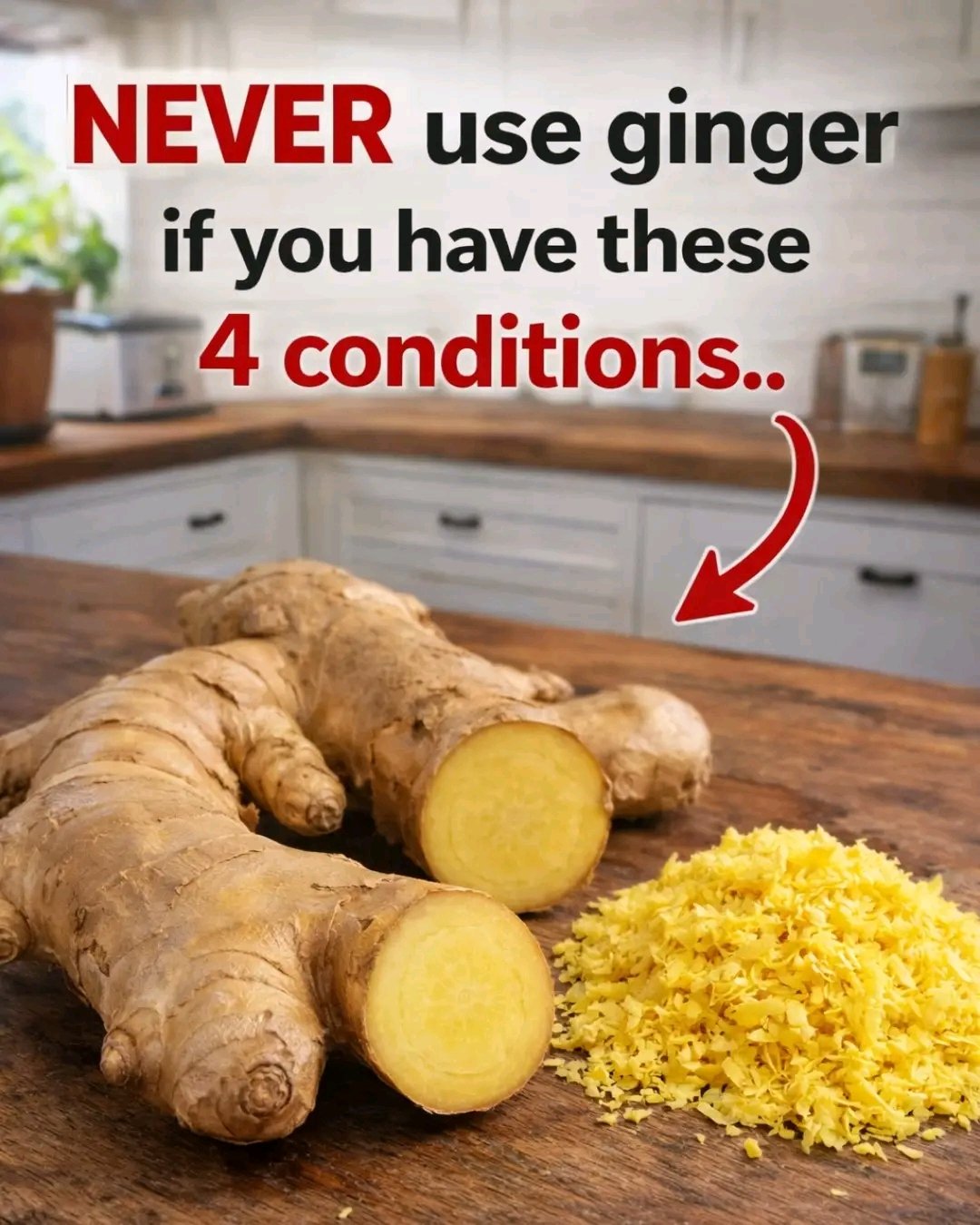

Ginger is widely used for digestion, immunity, and inflammation—but it’s not suitable for every situation. Here are 4 conditions where you should be careful, along with what doctors generally advise:
🩸 1. Bleeding Disorders
If you have a condition that affects blood clotting, ginger may not be ideal.
It has natural blood-thinning properties, which can increase the risk of bleeding.
Doctor’s insight: People with bleeding disorders or those preparing for surgery are often advised to limit or avoid ginger supplements.
💊 2. Taking Blood-Thinning Medications
If you’re on medications like Warfarin, Aspirin, or Clopidogrel, ginger can amplify their effect.
Why it matters: This combination may increase the risk of bruising or internal bleeding.
🤰 3. Pregnancy (in high amounts)
Small amounts of ginger (like in tea) are often used for nausea, but large doses may not be safe.
Doctor’s insight: High intake could potentially affect hormones or increase certain risks—so moderation and medical advice are key.
🩺 4. Gallbladder Problems
Ginger can increase bile production, which may worsen symptoms if you have gallstones or gallbladder disease.
Doctor’s insight: If you’ve been diagnosed with gallbladder issues, it’s best to consult a doctor before regular use.
⚠️ Final Word
Ginger is healthy for most people—but more is not always better.
If you have any of the conditions above or take regular medication, it’s wise to check with a healthcare professional before using it daily or in large amounts.