1. Dry throat, nose, and mouth
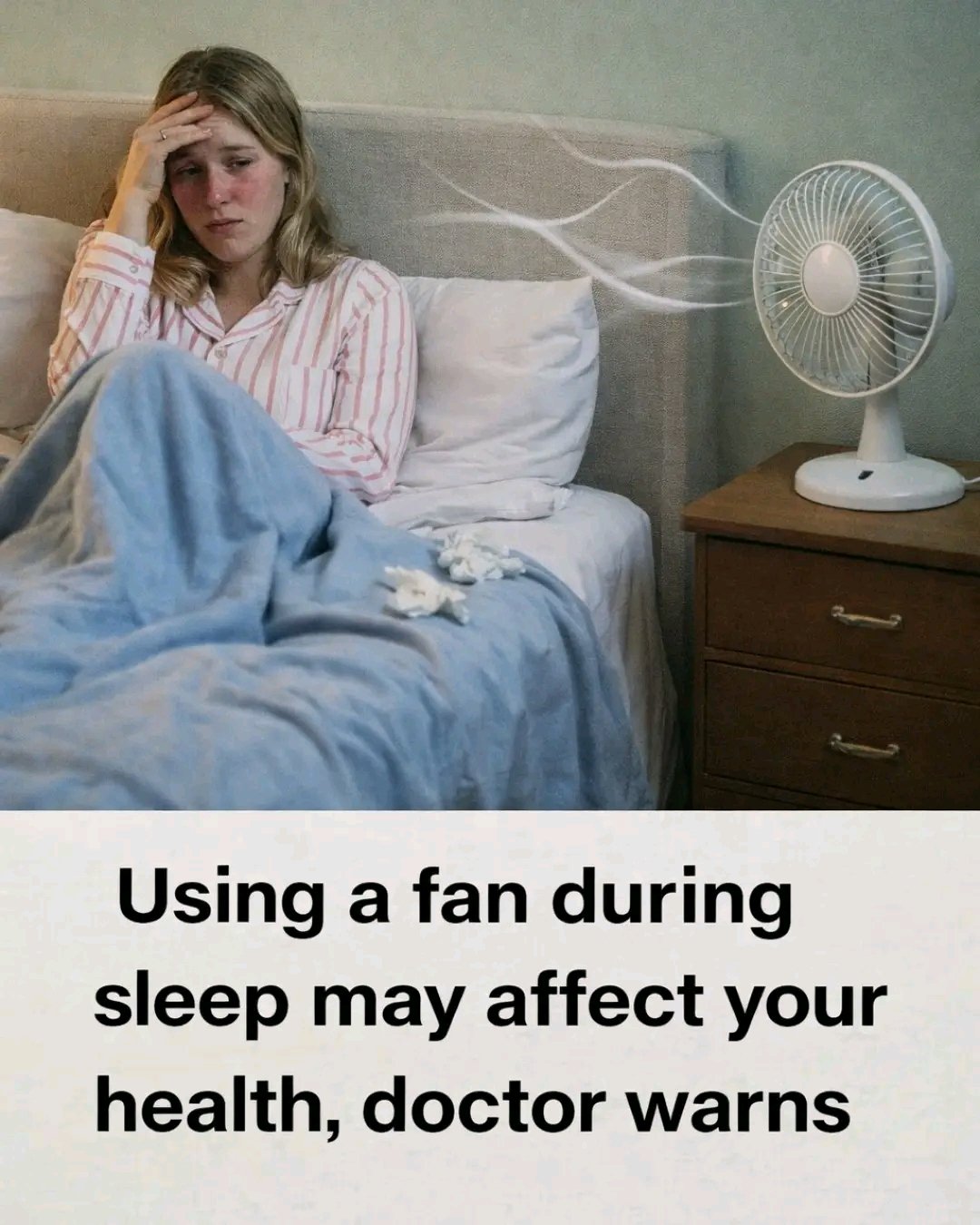
The constant airflow from a fan can dry out the mucous membranes in your nose and throat. This may cause:
Dry throat in the morning
Scratchy voice
Nasal irritation
Increased mucus production (stuffy nose) �
UNILAD Tech +1
2. Allergies or asthma can worsen
Fans circulate air around the room, which can lift dust, pollen, and pet dander. If you have allergies or asthma, this may trigger:
Sneezing
Runny nose
Itchy eyes
Breathing problems �
Livestrong +1
3. Sinus congestion
Dry air from the fan can irritate your nasal passages. Your body may produce extra mucus to compensate, leading to:
Blocked sinuses
Headaches
Snoring or coughing at night �
Livestrong
4. Dry skin and eyes
Air blowing directly on your body can remove moisture from the skin and eyes, especially if you already live in a dry environment. �
Healthline
5. Muscle stiffness
If cold air blows directly on your body all night, muscles may tighten, causing neck or shoulder stiffness in the morning. �
UNILAD Tech +1
The good side
Despite these warnings, sleeping with a fan also has benefits:
Keeps you cool in hot weather
Improves air circulation
The steady “white noise” sound can help some people sleep better �
Healthline
✅ Safer tips if you sleep with a fan:
Don’t point it directly at your face or body
Clean the fan regularly to remove dust
Keep a glass of water nearby
Use a timer so it turns off after you fall asleep
Sleeping with a fan on is generally safe for most people, but it can cause dryness, allergies, or congestion—especially if the air blows directly on you all night.