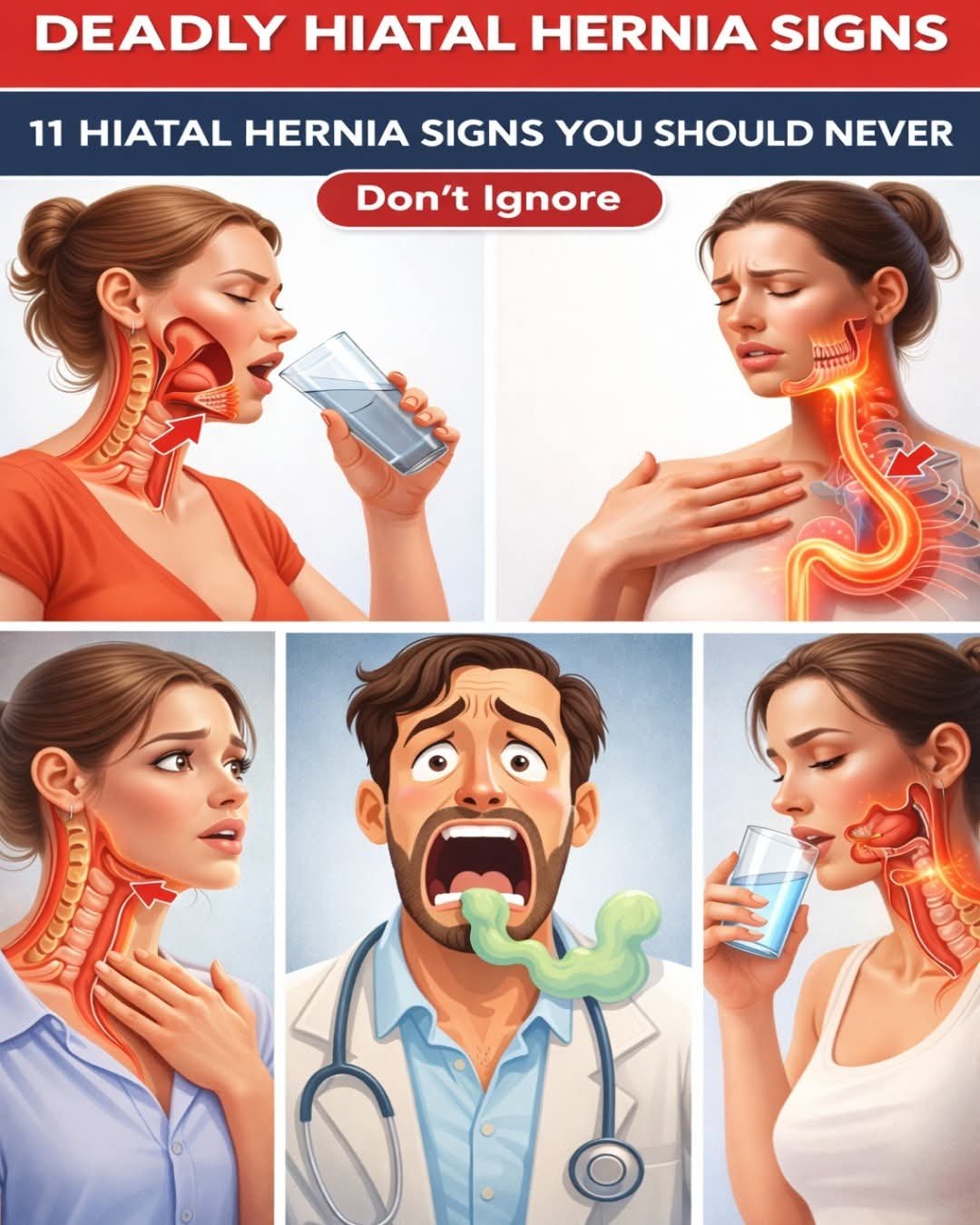
A hiatal hernia happens when part of your stomach pushes up through the diaphragm into your chest. Many people don’t even realize they have it—but for others, it can cause noticeable (and uncomfortable) symptoms.
🔥 1. Frequent Heartburn
A burning feeling in your chest, especially after eating or lying down.
🤢 2. Acid Reflux
Stomach acid flows back into the throat, leaving a sour or bitter taste.
😖 3. Chest Pain or Discomfort
Sometimes mistaken for heart-related issues—always take this seriously.
🍽️ 4. Difficulty Swallowing (Dysphagia)
Food may feel like it’s getting stuck in your throat or chest.
💨 5. Bloating & Belching
Excess gas, fullness, or frequent burping after meals.
🛌 6. Symptoms Worse When Lying Down
Reflux and discomfort often increase when you lie flat or bend over.
😴 7. Chronic Cough or Throat Irritation
Acid irritation can trigger coughing or a scratchy throat.
🗣️ 8. Hoarseness or Voice Changes
Especially in the morning due to acid reaching the vocal cords.
🤮 9. Nausea or Vomiting
More common in larger hernias.
🩸 10. Anemia or Fatigue (Rare but Serious)
Slow internal bleeding can lead to iron deficiency over time.
🚨 When to Seek Medical Help
Get checked if you have:
Severe or persistent chest pain
Trouble swallowing
Vomiting blood or black stools
Symptoms that don’t improve with basic care
✅ Simple Tips to Manage Symptoms
Eat smaller, more frequent meals
Avoid lying down right after eating
Limit spicy, fatty, and acidic foods
Elevate your head while sleeping
Maintain a healthy weight