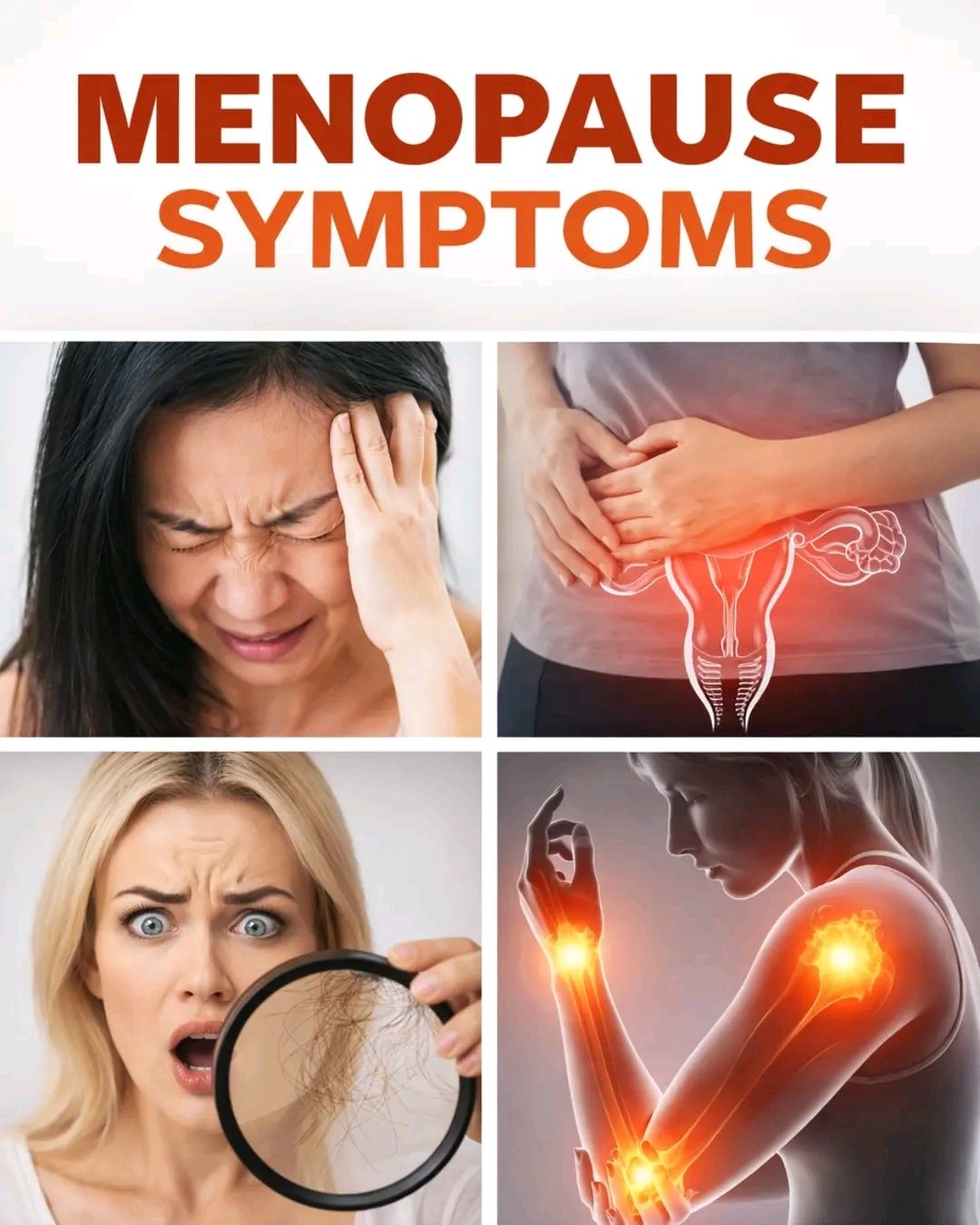
Early menopause means your periods stop before the age of 45 (and sometimes even before 40). It happens when the ovaries stop releasing eggs and make much less estrogen.
According to the World Health Organization, menopause is a natural life stage — but when it comes early, it can affect both physical and emotional health.
Here are the most important warning signs you should not ignore.
🔟 Main early menopause signs
1. Irregular periods
Your cycle becomes late, early, very light, or suddenly very heavy. This is usually the first sign.
2. Hot flashes
Sudden heat in the face, neck, and chest, often with sweating and redness.
3. Night sweats
Waking up at night with heavy sweating, even when the room is cool.
4. Mood changes
You may feel irritable, anxious, low, or emotionally sensitive without a clear reason.
5. Trouble sleeping (insomnia)
Difficulty falling asleep or waking up many times during the night.
6. Low sexual desire
A noticeable drop in interest in intimacy.
7. Vaginal dryness
Dryness, burning, or discomfort, especially during intercourse.
8. Fatigue and low energy
Feeling tired most of the day, even after enough rest.
9. Brain fog and poor concentration
Forgetting things easily or finding it hard to focus.
10. Headaches or body aches
More frequent headaches, joint pain, or muscle stiffness.
➕ More signs you may notice
• Weight gain, especially around the belly
• Hair thinning or increased hair fall
• Dry skin and brittle nails
• Palpitations (fast or irregular heartbeat)
• Increased anxiety or panic feelings
• Frequent urinary infections or urgency
⚠️ Why early menopause matters
When menopause comes early, low estrogen for many years can increase the risk of:
weak bones (osteoporosis)
heart disease
memory and mood problems
That is why early detection is very important.
🩺 When should you see a doctor?
You should consult a gynecologist if:
you are under 45 and
your periods have become very irregular or stopped for 3–4 months, and
you have several of the symptoms above.
A simple blood test (FSH, estrogen levels) and medical history can help confirm it.
🌼 Important note for you
If you are noticing two or more of these signs together, do not ignore them.
Early menopause is not rare, and proper medical advice can protect your long-term health.