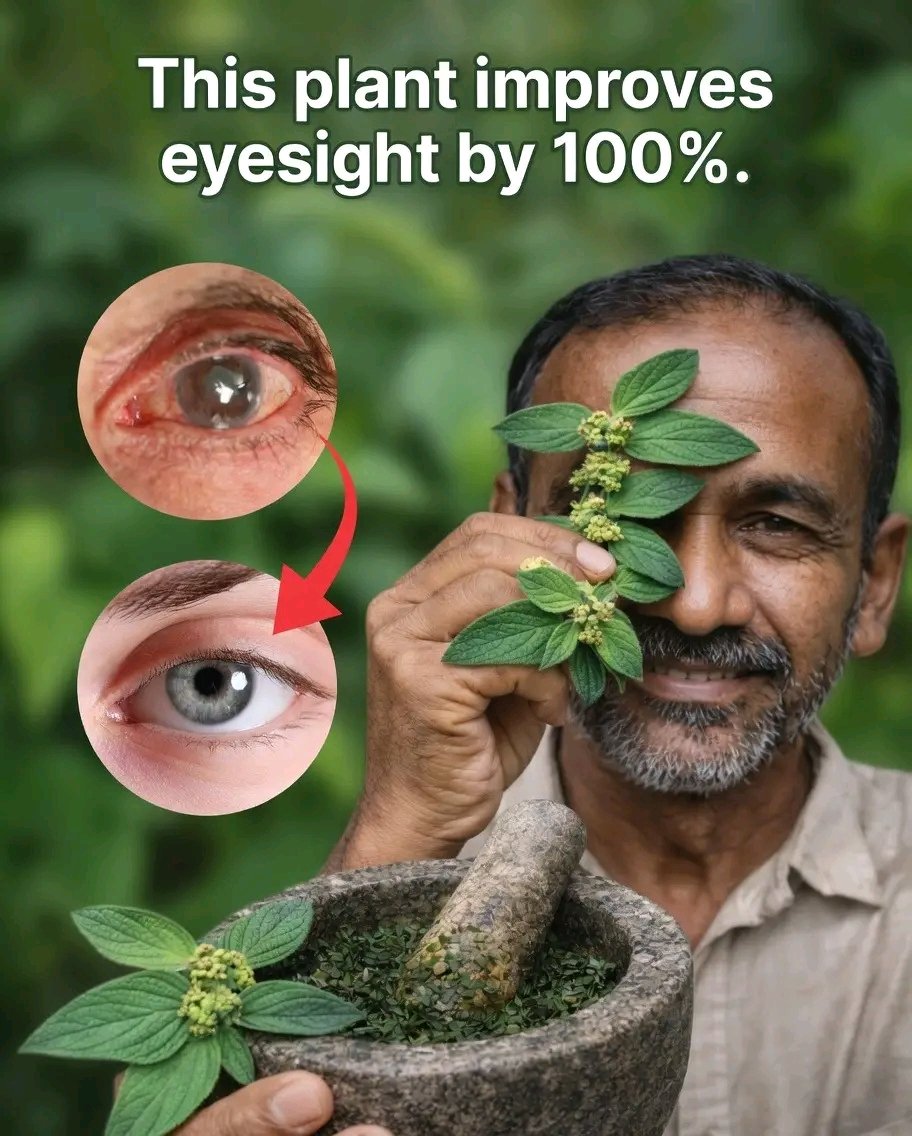
The plant often called “big-leaf milkweed” usually refers to species like Calotropis (commonly Calotropis gigantea or Calotropis procera). It has been used in some traditional remedies—but the viral claims about eye care need a reality check.
⚠️ Important Warning (Especially for Eyes)
This plant produces a milky white sap (latex) that is toxic and irritating.
Direct contact with the eyes can cause:
Burning and redness
Swelling and blurred vision
In severe cases, temporary vision loss or corneal damage
Doctors strongly advise against putting this plant or its sap in or near your eyes. What’s shared online as a “natural cure” can actually be dangerous.
🌿 Traditional Uses (With Caution)
In traditional medicine, parts of Calotropis have been used for:
Skin conditions
Pain relief (externally)
Digestive issues (in controlled, processed forms)
But these uses are not the same as safe eye treatments, and they require proper knowledge and preparation.
✅ What You Should Do Instead
If you’re dealing with eye problems:
See a qualified eye specialist
Use clinically approved treatments
Avoid experimenting with unknown plant extracts
👍 Bottom Line
Big-leaf milkweed (Calotropis) is not safe for eye use
Its sap is irritating and potentially harmful