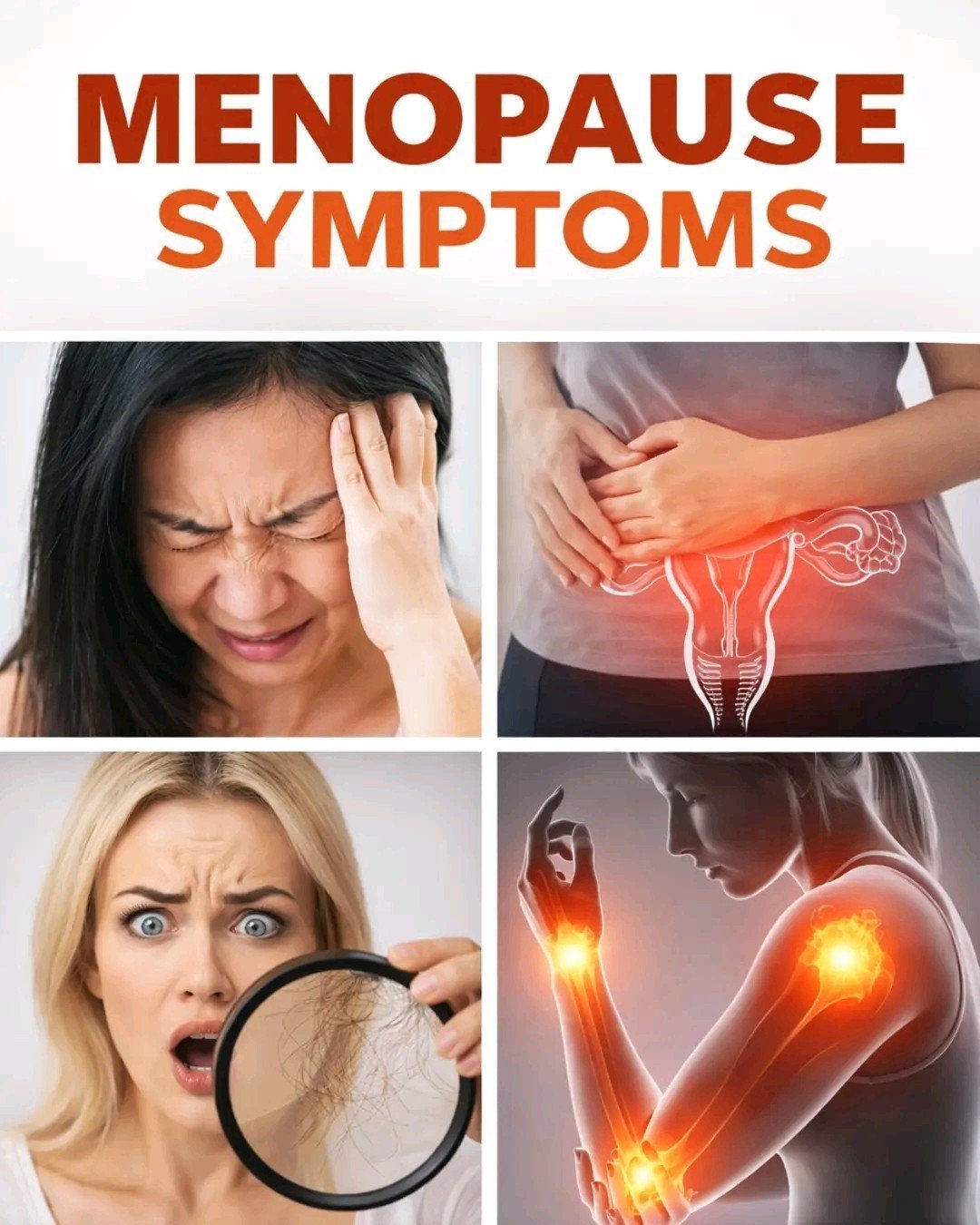
Early menopause happens when a woman’s menstrual cycles stop before age 45. It can occur naturally or due to medical conditions, treatments, or genetics. Recognizing the signs early can help you manage symptoms and protect long-term health.
🔟 Common Signs of Early Menopause
1. Irregular Periods
Cycles may become unpredictable—shorter, longer, heavier, or lighter than usual.
2. Hot Flashes 🔥
Sudden waves of heat, often with sweating and a flushed face, even in cool environments.
3. Night Sweats
Waking up drenched in sweat, which can disturb sleep and leave you feeling exhausted.
4. Vaginal Dryness
Lower estrogen levels can cause discomfort, itching, or pain during intimacy.
5. Mood Swings 😔
Increased irritability, anxiety, or feelings of sadness without a clear reason.
6. Trouble Sleeping 😴
Difficulty falling or staying asleep, often linked to hormonal changes.
7. Low Libido
A noticeable decrease in sexual desire.
8. Memory & Focus Issues
Brain fog, forgetfulness, or trouble concentrating.
9. Weight Gain
Especially around the abdomen, even without major lifestyle changes.
10. Hair & Skin Changes
Hair thinning, dry skin, or loss of elasticity.
⚠️ Additional Symptoms to Know
Breast tenderness
Headaches
Joint or muscle pain
Heart palpitations
Increased urinary urgency or infections
🧠 What Causes Early Menopause?
Genetics (family history)
Autoimmune diseases
Medical treatments like chemotherapy or surgery
Smoking
Certain infections
🩺 Why It Matters
Early menopause isn’t just about periods stopping—it can increase the risk of:
Osteoporosis (bone loss)
Heart disease
Fertility challenges
💡 What You Can Do
See a doctor for proper diagnosis and hormone testing
Maintain a balanced diet rich in calcium and vitamin D
Stay physically active 🏃♀️
Manage stress through relaxation techniques
Discuss treatments like hormone therapy if needed
🚨 When to Seek Medical Advice
If you’re under 45 and experiencing several of these symptoms—especially missed periods for 3 months or more—it’s important to consult a healthcare professional.