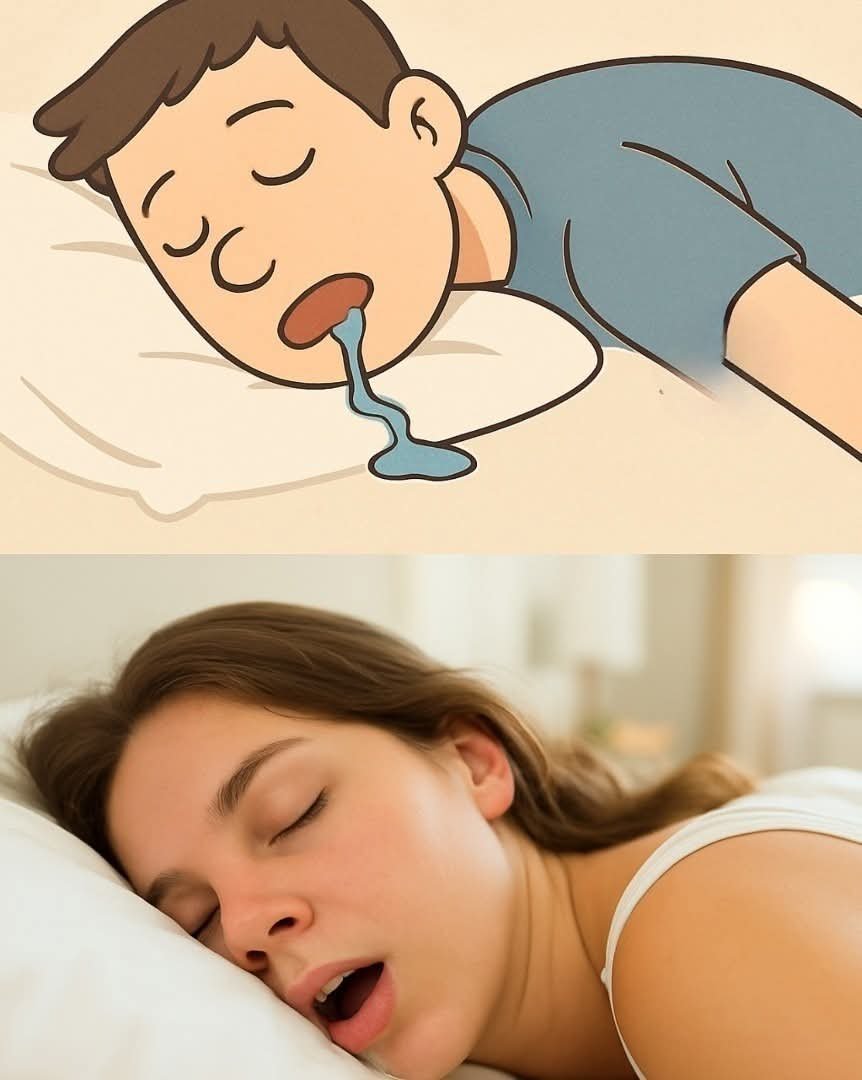
You may have seen viral claims like:
👉 “If you drool while you sleep, it means your brain is…”
Let’s clear it up with real facts 👇
🧠 The Truth About Drooling
Drooling during sleep is usually NOT a sign of a brain problem. In most cases, it’s completely harmless and linked to how your body relaxes at night.
✅ Common Reasons You Drool While Sleeping
1. Deep Sleep Relaxation 😌
When you’re in deep sleep, your facial muscles relax—so saliva can escape more easily.
2. Sleeping Position 🛌
Lying on your side or stomach makes drooling more likely due to gravity.
3. Mouth Breathing 👄
Blocked nose or habit can make you breathe through your mouth, leading to drooling.
4. Sinus or Nasal Issues 🤧
Colds, allergies, or sinus infections can increase saliva buildup.
5. Acid Reflux
Conditions like Gastroesophageal Reflux Disease can sometimes increase saliva production at night.
⚠️ When It Could Be a Concern
In rare cases, excessive drooling may be linked to:
Sleep Apnea (breathing interruptions during sleep)
Neurological conditions affecting swallowing
Severe infections or medication side effects
👉 Especially if you also notice:
Choking or gasping during sleep
Loud snoring
Difficulty swallowing when awake
🟢 Simple Ways to Reduce Drooling
Sleep on your back
Keep your nose clear (steam, saline spray)
Stay hydrated 💧
Improve sleep posture
Treat allergies or sinus issues
✔️ Bottom Line
Drooling while sleeping does NOT mean your brain is damaged or failing.
It’s usually just a sign your body is relaxed and in deep sleep—which is actually a good thing!