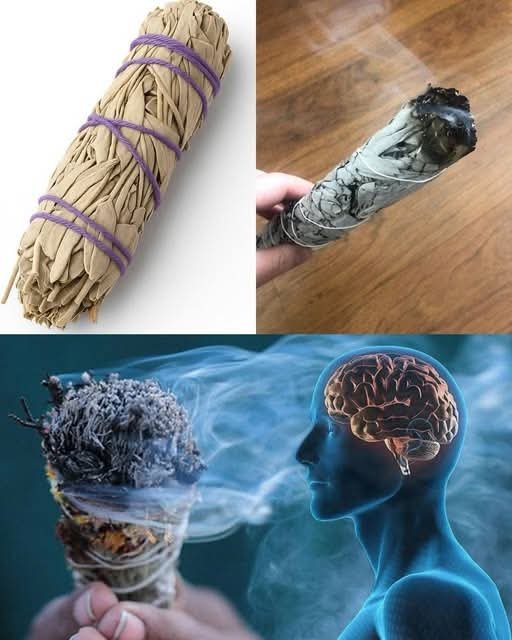
Smudging (burning sage and letting the smoke spread through a room) is an ancient tradition — but modern science has actually tested what this smoke does to bacteria in the air.
Here’s the simple truth 👇
🔬 What science really found
A well-known laboratory study published in the Journal of Ethnopharmacology examined the smoke of traditional medicinal plants (including sage-type herbs).
Result:
Herbal smoke significantly reduced airborne bacteria in an enclosed room — and the effect lasted for hours after the smoke cleared.
In plain words:
👉 The smoke didn’t just cover bad smells
👉 It actually lowered the number of germs floating in the air
🌫️ How sage smoke can affect bacteria
When sage is burned, it releases:
natural volatile oils
aromatic antimicrobial compounds
These compounds can:
✔ damage bacterial cell walls
✔ slow down bacterial growth in the air
This is why, historically, many cultures used smoke to “clean” living spaces long before disinfectants existed.
⚠️ Important reality check (very important)
Smudging is NOT a medical treatment.
It:
❌ does NOT sterilize a room
❌ does NOT kill all viruses
❌ does NOT replace proper cleaning, ventilation, or disinfectants
Think of it as:
👉 a traditional air-freshening and light antimicrobial practice — not a hospital-level solution.
🫁 One safety note many people forget
Sage smoke is still smoke.
If you have:
asthma
breathing problems
small children at home
👉 use very small amounts and make sure the room is well ventilated.
🌿 Simple takeaway
Yes — science shows sage smoke can reduce airborne bacteria.
But it works best as a cultural and supportive practice, not as a health cure.
✨ Tradition meets science — just keep expectations realistic.